What to know first
The first decision is where vehicles will park and where wet activity will occur. For an Alpine, NJ garage, sketch each parking position, the areas reached by wet tires or dripping items, and the route used to carry household belongings. Then reserve a dry zone for items that should stay away from vehicle traffic. Alpine serves Alpine and the wider Bergen County area as a service-area business; homeowners can also review the [Bergen County service area](/service-areas/bergen-county-nj) when planning service availability.
After the parking footprint is set, divide the walls and ceiling by function. Enclosed cabinets can hold dry household supplies, while slatwall can organize items that need regular access without spreading them across the floor. Overhead storage may suit seasonal belongings that do not need frequent handling. Measure the available wall runs, ceiling height, garage-door travel, and the distance between parking and storage. The planning takeaway is simple: decide which zones are exposed to vehicle moisture before assigning products or placing boxes.
Floor selection should follow use and concrete conditions rather than a universal preference for epoxy or polyaspartic. Alpine can discuss epoxy, polyaspartic, full-broadcast decorative flake, and metallic epoxy systems, including appearance, texture, application sequence, and practical care. A decorative flake finish may create a different visual and cleaning experience from a metallic design, while a solid system may present another set of tradeoffs. Ask for the proposed product layers and confirm how the chosen finish is intended to handle the garage’s planned wet and dry zones.
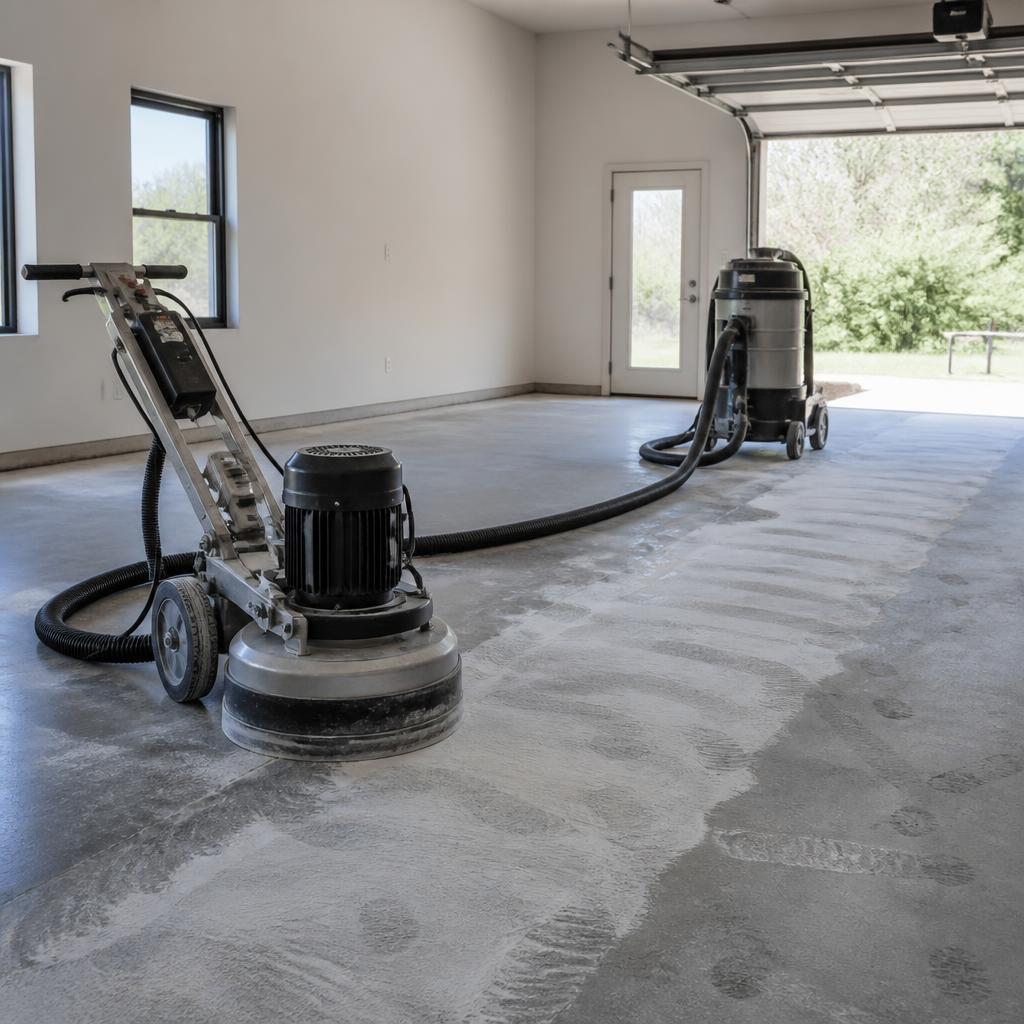
Preparation deserves its own line in the decision process. Depending on inspection results, work may include cleaning, contaminant checks, moisture assessment when appropriate, mechanical profiling such as diamond grinding, crack or spall repair, and removal of an old coating. Northeast garages can encounter moisture, winter road salt, grit, wet vehicle traffic, hot tires, and temperature changes. Those are reasons to ask questions, not reasons to assume a defect at a particular Alpine property. Request a written explanation of what the slab inspection found and which preparation tasks are included or excluded.
A useful storage layout keeps dry household goods away from the vehicle-facing portion of the garage without blocking parking or service access. Compare cabinet depth and door swing with the space needed to enter and exit vehicles. Use slatwall where adjustable organization is valuable, and evaluate overhead storage only after confirming clearance around open doors, lighting, and garage equipment. Ask what each product is designed to hold and how it will be installed. Measure the proposed dry zone separately so the estimate reflects actual storage requirements instead of a vague allowance.
Starting floor-package prices are $1,799 for one car and $2,999 for two cars. Metallic and qualifying custom finishes may add 20%. A written estimate should distinguish the floor package from storage, repairs, preparation, taxes or fees if applicable, and any conditions that could change the price. It should identify the measured area or package definition, coating system, decorative choices, edge details, cure or access expectations, and moisture-related assumptions. Comparing proposals this way is more useful than comparing a single headline number.
Alpine offers a 5-Year Limited Labor Warranty governed by written terms, while manufacturer warranties are separate. Review both the coverage and exclusions; neither should be treated as a guarantee of waterproofing, structural performance, slip-proof behavior, maintenance-free ownership, or lifetime results. Before taking the next step, label a wet vehicle zone and a dry storage zone on a simple sketch, list items that must stay accessible, and request an on-site assessment with an itemized scope. That preparation helps you compare systems and storage plans whether or not you ultimately choose Alpine.
Divide the garage by use
- Draw the parking footprint and mark where wet tires, dripping equipment, or vehicle-related activity are expected.
- Identify a dry household-storage zone and record the wall length, depth, and clearance available there.
- Measure ceiling height and garage-door movement before considering overhead storage or tall cabinets.
Compare proposals by scope
- Confirm the coating system, preparation method, decorative finish, texture, repairs, and concrete or moisture assumptions.
- Request separate prices for cabinets, slatwall, overhead storage, installation, and any substrate work.
- Check access or cure instructions, warranty documents, manufacturer coverage, exclusions, and care requirements in writing.
More local service information
Other Alpine town guides in Bergen County
Use these county links to compare planning guidance for other communities Alpine serves. They do not imply a storefront or completed project in any town.
Bergen County
Not sure whether your address is covered? Share your ZIP code with Alpine.
Frequently asked questions
Can Alpine separate wet and dry areas with one garage floor system?
A coating can create a continuous finished floor, but wet and dry planning is mainly handled through parking layout, storage placement, and clearly stated preparation and care expectations.
Which storage is better for dry household items?
Cabinets generally offer enclosed storage, while slatwall provides adjustable access; the better option depends on item size, frequency of use, clearances, and the planned dry zone.
Should moisture be tested before coating?
Moisture assessment may be appropriate after inspection, especially when conditions could affect preparation or system selection; ask that the assessment and any response be documented.
Are metallic finishes included in the starting price?
They may not be: metallic and qualifying custom finishes may add 20% to the starting floor-package price.
What warranty does Alpine provide for labor?
Alpine provides a 5-Year Limited Labor Warranty governed by written terms; manufacturer warranties are separate, so review both documents and their exclusions.