What to know first
Before investigating the floor, identify what the garage must accommodate each day. In Newtown, make a list of vehicles, hand tools, household supplies, recycling containers, and other items that need dependable access. Put enclosed, less-visible categories behind cabinets and keep frequently handled equipment on slatwall where it can be seen and repositioned. Measure wall runs, outlets, door clearances, and the footprint of anything that cannot move. This first inventory prevents a floor decision from dictating an impractical layout. Your planning takeaway: establish access priorities before disturbing or covering the existing slab.
Next, separate seasonal storage from daily-use equipment. Overhead storage may preserve usable wall and floor area for regular tasks, while upper cabinets or less-accessed slatwall sections can handle containers that rotate during the year. Check bin dimensions, ceiling height, garage-door movement, lighting, and vehicle clearance before committing to a storage arrangement. If the slab has an unknown coating or patch history, keep storage movable enough to allow inspection and preparation. Ask for a layout that identifies what must be relocated, protected, or removed before work begins.
An unfamiliar surface history changes the questions you should ask about a floor system. Alpine’s preparation process may include inspection, cleaning, contaminant checks, mechanical profiling such as diamond grinding, crack or spall repair, old-coating removal, and moisture assessment when appropriate. A visual review alone may not explain why a prior material was applied, where patches end, or whether contaminants remain. Request that the proposal describe how the existing surface will be evaluated and what happens if additional removal or repair is needed. Do not accept a finish recommendation without understanding its preparation assumptions.
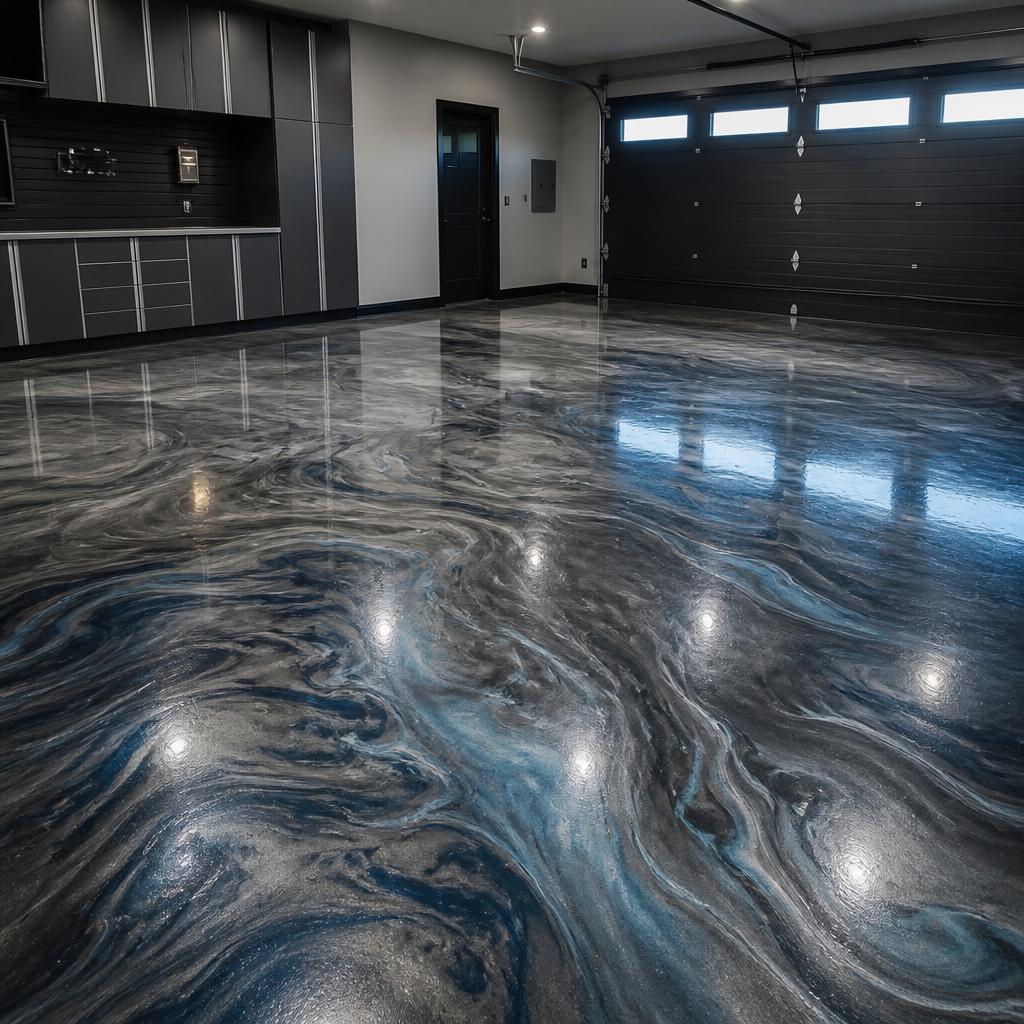
The floor system should follow the assessment rather than precede it. Available options include professional epoxy, polyaspartic, full-broadcast decorative flake, and metallic epoxy. They offer different visual effects and project considerations, so compare cure expectations, finish goals, preparation requirements, and how the space will be used. Wet vehicle traffic, winter road salt, grit, hot tires, moisture, and temperature changes are relevant planning topics for a Northeast garage, not proof of a condition at a particular home. The takeaway: select the system only after the slab history and intended use are addressed together.
Old coatings and patchwork can also affect schedule, access, and budget. Ask whether diamond grinding or another mechanical profile is planned, how dust and debris will be managed, and whether cracks, spalls, weak areas, contaminants, or moisture concerns change the scope. Storage should be priced with the same clarity: identify cabinet sizes, slatwall coverage, overhead components, mounting requirements, and exclusions. A useful written estimate distinguishes known work from allowances or conditions discovered after removal. That makes competing proposals easier to compare and reduces the risk of treating an unknown surface as a routine application.
Starting floor-package prices are $1,799 for one car and $2,999 for two cars. Metallic and qualifying custom finishes may add 20%. Because an unknown coating or repair history can affect preparation, the final written estimate should state the measured area, selected products, removal assumptions, repair pricing, moisture assessment when appropriate, finish, storage scope, and access expectations. Alpine serves Newtown and Fairfield County as a service-area business. Its 5-Year Limited Labor Warranty is governed by written terms, while manufacturer warranties are separate; request both before approving work.
For a useful comparison, photograph the current slab, note visible patches or peeling areas without assuming their cause, and gather any records or product labels that may remain. Move only what the evaluator requests, keeping a clear route to inspect edges, transitions, and wall lines. Ask Alpine—and any competing provider—to explain what is known, what requires testing or removal, and what would trigger a written change in scope. This approach gives you a defensible floor decision and a storage plan even if you ultimately choose not to coat the garage.
Document an uncertain surface
- Photograph the slab, visible patches, old coating, edges, and transitions before moving stored items.
- Write down any product labels, prior invoices, or maintenance notes that may identify earlier materials.
- Ask how contaminants, moisture, weak areas, and coating adhesion will be evaluated when appropriate.
Require a clear scope
- Separate old-coating removal, diamond grinding, cleaning, repairs, and coating installation in the estimate.
- State the finish, measured area, storage dimensions, access expectations, and possible change-order conditions.
- Review the 5-Year Limited Labor Warranty and separate manufacturer warranty documents before signing.
More local service information
Other Alpine town guides in Fairfield County
Use these county links to compare planning guidance for other communities Alpine serves. They do not imply a storefront or completed project in any town.
Fairfield County
Not sure whether your address is covered? Share your ZIP code with Alpine.
Frequently asked questions
Can Alpine coat a slab when the previous coating is unknown?
An evaluation is needed first. Preparation may include inspection, contaminant checks, mechanical profiling, removal of old material, repairs, and moisture assessment when appropriate.
Does a patch automatically need to be removed?
Not necessarily. Its condition, bond, contamination, and compatibility must be assessed; the written scope should explain whether it is repaired, removed, or retained.
Why is mechanical profiling discussed before coating?
Mechanical profiling, such as diamond grinding, can prepare the surface and address existing material. The appropriate method depends on the slab and coating history found during evaluation.
Are the starting prices based on the slab’s condition?
The starting prices are $1,799 for one car and $2,999 for two cars. Unknown coatings, repairs, removal, and other preparation needs may affect the written estimate.
What should I do with cabinets and stored items before inspection?
Keep access open to the slab, edges, transitions, and walls. Ask which items must be moved or protected, and confirm relocation responsibilities in writing before scheduling.