What to know first
Epoxy and polyaspartic are both professional garage floor coating options. Epoxy is valued for working time, build, and decorative flexibility; polyaspartic is often selected for faster cure, UV stability, and abrasion resistance.
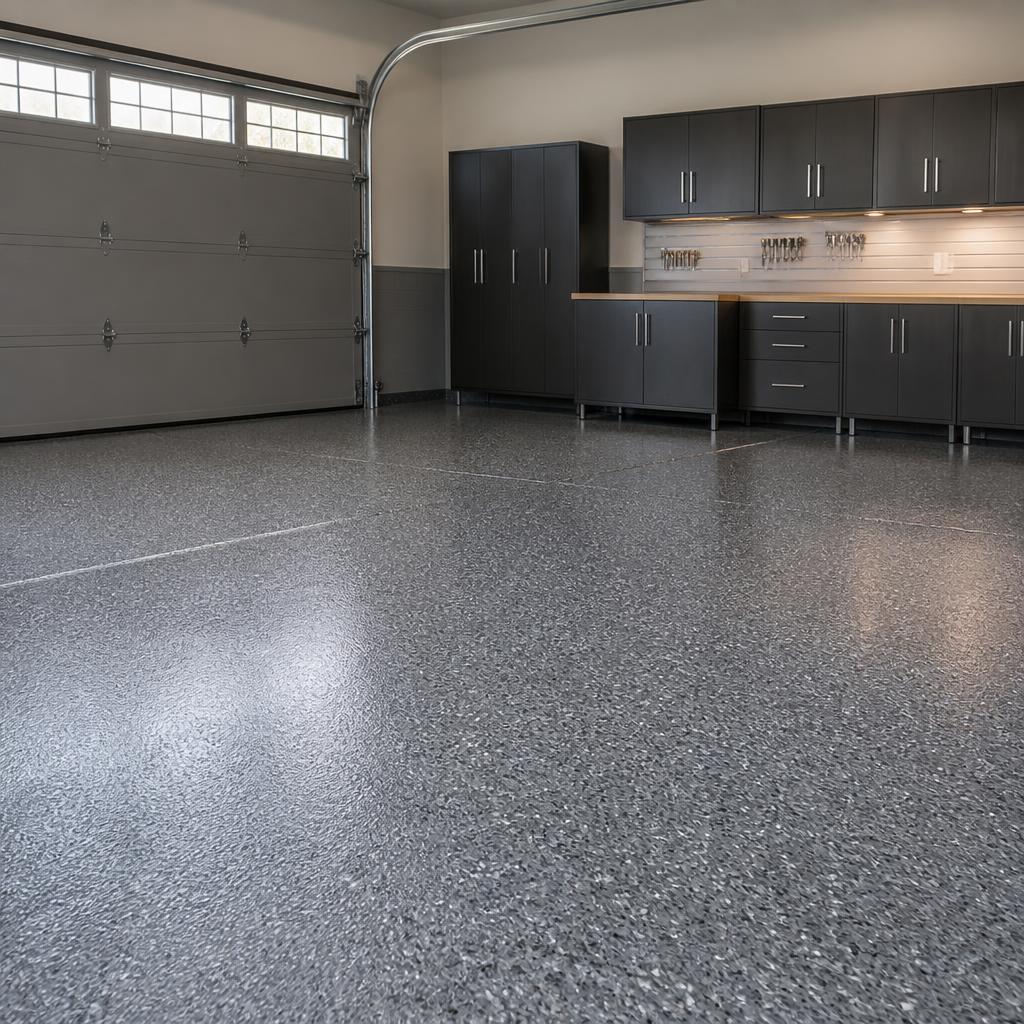
A hybrid system may use epoxy for the body coat and polyaspartic for the topcoat. Alpine evaluates concrete condition, moisture, temperature, installation timing, and the finished look before recommending a system.
| Consideration | Epoxy | Polyaspartic |
|---|---|---|
| Working time | Generally longer | Generally shorter |
| UV stability | Varies by formulation | Typically strong |
| Cure speed | Usually slower | Often faster |
| Best recommendation | After slab evaluation | After slab evaluation |
Answer first
- Choose by slab and use, not marketing label
- Preparation influences performance for either system
- Confirm cure and return-to-service timing for your specific installation
Frequently asked questions
Which is better for Northeast winters?
Either can be appropriate. Concrete condition, preparation, moisture, road salt, temperature, and the complete coating system matter more than the product name alone.
How much does garage flooring start at?
Published starting package pricing is $1,799 for a 1-car garage and $2,999 for a 2-car garage. Final pricing depends on size, concrete condition, preparation, coating system, and finish selections.
What warranty does Alpine provide?
Alpine provides a 5-Year Limited Labor Warranty according to its actual terms. Manufacturer and product warranties, where applicable, are separate and subject to the applicable manufacturer’s terms.
How do you prepare the concrete?
Preparation can include diamond grinding, crack or spall repair, removal of old coatings, cleaning, contaminant checks, and moisture assessment as appropriate for the existing slab and coating system.