What to know first
Before comparing epoxy with polyaspartic, ask for a written estimate that identifies the proposed system, finish, preparation steps, included repairs, exclusions, cure schedule, price, and warranty terms. It should also state whether cabinets, slatwall, or overhead storage are included separately. For a Norwalk project, the useful first record is not a product preference but a description of what the concrete may require. Ask the estimator to explain how each observed condition affects scope, cost, or system selection before you approve the work.
Work backward from that estimate by measuring the floor area and noting obstacles, floor drains, steps, doors, posts, and storage that must be moved or protected. Photograph cracks, spalls, stains, previous coatings, and areas where moisture questions arise. Mark whether each item is isolated, recurring, or uncertain rather than assuming its cause. This documentation gives you something concrete to compare when estimates use different preparation allowances. It also helps clarify whether a quoted one-car or two-car starting package reflects the actual coating area.
Concrete preparation can include inspection, cleaning, mechanical profiling such as diamond grinding, removal of old coatings, contaminant checks, and repair of cracks or spalled areas. Moisture assessment may be appropriate when the slab history or observed conditions raises questions. Preparation is not a cosmetic step: it determines what the installer can reasonably bond to and which repairs belong in the scope. Ask whether repairs are included at a stated allowance, priced after discovery, or excluded. Have the estimate distinguish surface preparation from changes that would require a separate evaluation.
Epoxy and polyaspartic systems involve different tradeoffs in working time, application conditions, appearance, and return-to-service planning. A full-broadcast decorative flake finish can provide a textured visual field, while metallic epoxy creates a more fluid, variable appearance and may add 20% when it qualifies as a custom finish. Neither choice should be presented as universally best. Ask which system is proposed for your schedule and slab findings, what finish samples represent the actual process, and how color variation or repaired areas may show through.
Norwalk garages can require planning around winter road salt, grit, wet vehicle traffic, hot tires, and temperature changes. These are exposure considerations, not proof of a condition at any particular property. Your written scope should state how contaminants will be checked, what cleaning is expected before installation, and what conditions must be met for application. Compare maintenance instructions as well: ask what routine cleaning the selected finish needs, what products to avoid, and how the installer handles a future spill or localized damage question.
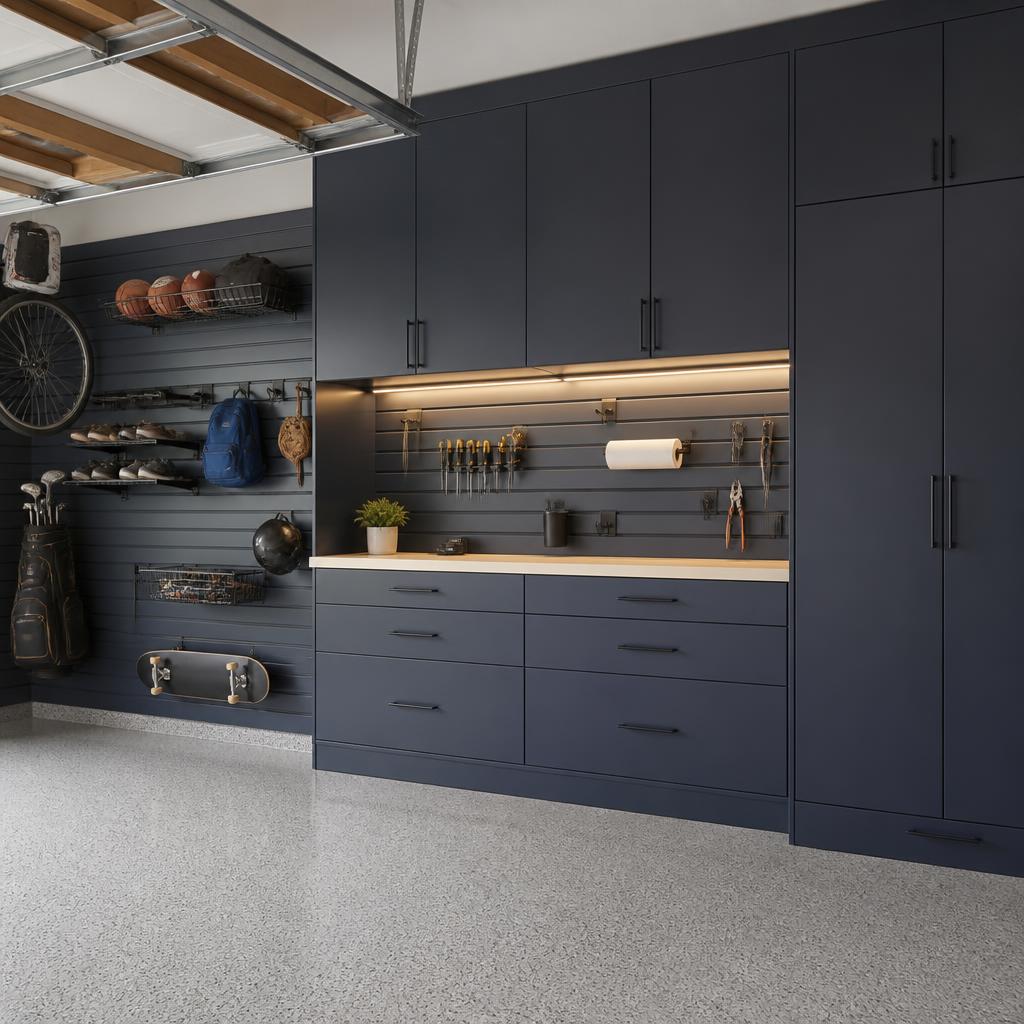
Storage should be evaluated alongside the floor rather than after it. Measure wall lengths, ceiling height, door swing, vehicle clearance, and the depth available for cabinets or slatwall. For overhead storage, ask what the installation includes and what load or mounting limitations must be reviewed; do not assume a coating contractor is making a structural or code determination. A useful estimate separates cabinets, slatwall, and overhead storage from floor pricing, identifies installation locations, and notes any owner-supplied items or access requirements.
Starting floor-package prices are $1,799 for one car and $2,999 for two cars. Those figures are starting points, not a promise that every slab fits the package. Metallic and qualifying custom finishes may add 20%, while extensive preparation, old-coating removal, repairs, access issues, or storage can change the total. Alpine serves Norwalk and Fairfield County as a service-area business. Before scheduling, compare the measured area, preparation assumptions, finish, storage scope, payment terms, cure timing, and written exclusions, then keep the final estimate and warranty together.
A 5-Year Limited Labor Warranty is governed by written terms, and manufacturer warranties are separate. Ask who provides each warranty, what installation or product situations are covered, and what maintenance or documentation is required. The practical next step is to send measurements and condition photos, request an inspection when appropriate, and ask for a line-item estimate that records cracks, spalls, stains, moisture questions, preparation, system, finish, storage, price, timing, and warranty. That process remains useful even if you ultimately compare another installer.
Record before requesting estimates
- Measure the coating area separately from cabinets, slatwall, and overhead storage zones.
- Photograph and label cracks, spalls, stains, old coatings, and any moisture-related observations.
- List doors, drains, steps, posts, vehicles, and items requiring relocation or protection.
Require these estimate details
- Name the proposed epoxy or polyaspartic system, finish, flake coverage, and any custom-finish surcharge.
- State profiling, cleaning, repairs, coating removal, contaminant checks, and moisture assessment responsibilities.
- Show starting-package assumptions, added work, cure timing, exclusions, payment terms, and warranty documents.
More local service information
Other Alpine town guides in Fairfield County
Use these county links to compare planning guidance for other communities Alpine serves. They do not imply a storefront or completed project in any town.
Fairfield County
Not sure whether your address is covered? Share your ZIP code with Alpine.
Frequently asked questions
Can Alpine evaluate a Norwalk garage if I am unsure what caused a stain or crack?
Yes. Alpine can inspect the surface and identify preparation or moisture-assessment questions when appropriate, but an inspection does not establish a structural diagnosis or guarantee a cause.
Are crack and spall repairs included in the starting floor price?
Not automatically. Ask the written estimate whether repairs are included, limited by an allowance, priced after discovery, or excluded from the starting package.
What does full-broadcast flake mean for this type of project?
It means decorative flakes are broadcast across the wet coating to create a dense, varied finish. Confirm the selected colors, texture, topcoat, and maintenance directions in writing.
Can I add wall storage after the coating is installed?
Possibly, but mounting locations and access should be planned first. Measure walls and clearance now, and ask whether cabinets, slatwall, or overhead storage are separate scopes.
When can vehicles return to the garage?
The installer should provide cure and return-to-service timing for the selected system and conditions. Do not rely on a generic estimate; include the schedule in the written proposal.